
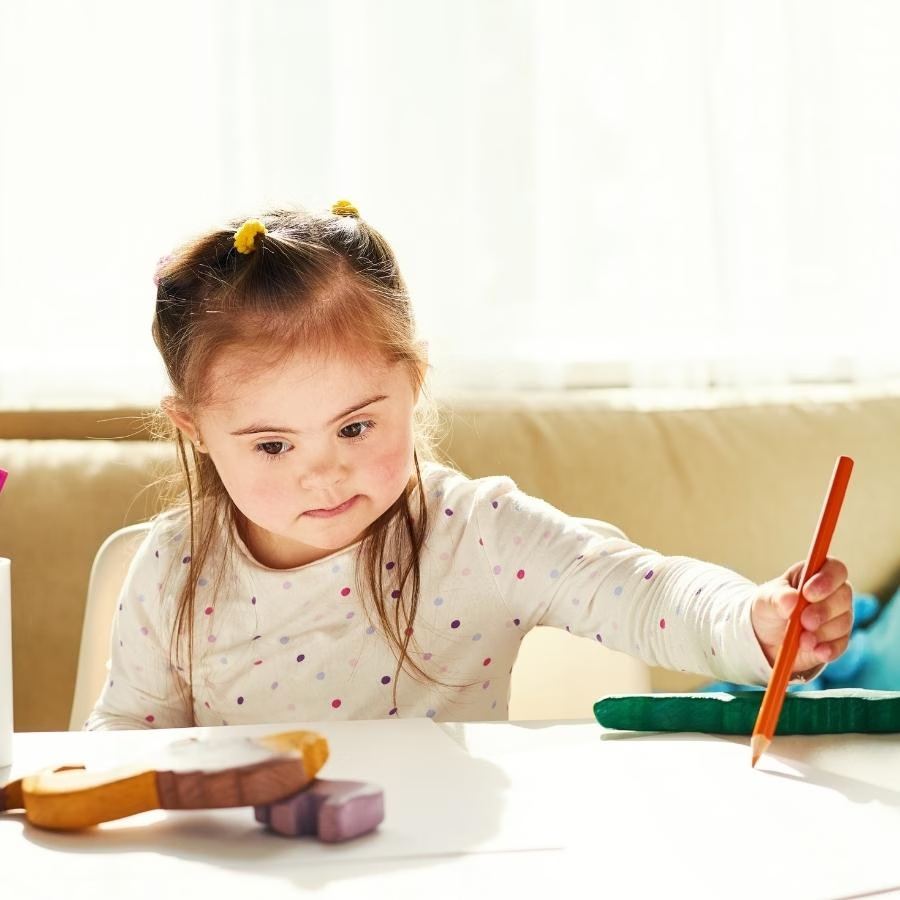
Daily Living Skills Every Child Can Learn at Their Own Pace
Every child deserves the chance to become more confident, capable, and involved in their everyday life. For children with disabilities, learning daily living skills isn’t about reaching milestones by a certain age or keeping up with other children. It’s about developing practical abilities that make everyday routines easier while building confidence one step at a […]
Every child deserves the chance to become more confident, capable, and involved in their everyday life.
For children with disabilities, learning daily living skills isn’t about reaching milestones by a certain age or keeping up with other children. It’s about developing practical abilities that make everyday routines easier while building confidence one step at a time.
Many parents wonder whether they’re helping too much or expecting too much.
Should your child be dressing themselves?
Making their own breakfast?
Packing their school bag?
The honest answer is that there’s no universal timeline.
Every child develops differently, and progress depends on their individual strengths, support needs, and opportunities to practise. Some children quickly become confident with personal care tasks, while others may need extra time, visual supports, or ongoing encouragement.
What matters most isn’t how quickly your child learns.
It’s that they continue learning.
Daily living skills are built through small, consistent experiences. Every time your child successfully completes a task, no matter how simple it may seem, they’re building confidence that can carry into school, community participation, friendships, and eventually adulthood.
What Are Daily Living Skills?
Daily living skills are the everyday tasks people use to care for themselves and participate more independently in family and community life.
These skills are sometimes referred to as Activities of Daily Living, but they don’t have to sound complicated.
They’re simply the practical things we do every day.
For children, daily living skills may include:
- Getting dressed.
- Brushing teeth.
- Washing hands.
- Packing a school bag.
- Choosing clothes.
- Helping prepare meals.
- Tidying toys.
- Following a morning routine.
- Asking for help when needed.
- Participating in household responsibilities.
These tasks may seem ordinary, but together they form the foundation for greater independence later in life.
Importantly, daily living skills should always be matched to your child’s individual abilities rather than their age alone.
Two children of the same age may be working on completely different goals, and both can be making excellent progress.
Why Daily Living Skills Matter
It’s easy to think these everyday tasks are simply chores.
In reality, they’re opportunities for learning.
Every new skill your child develops teaches much more than the task itself.
When a child learns to brush their own teeth, they aren’t only learning personal hygiene.
They’re learning responsibility.
Routine.
Confidence.
Persistence.
The belief that they can do things for themselves.
Over time, daily living skills help children:
- Build self-confidence.
- Increase independence.
- Improve problem-solving.
- Develop responsibility.
- Strengthen decision-making skills.
- Feel more involved in family life.
- Prepare for greater independence as they grow older.
For children supported through the NDIS, developing these practical skills is often an important part of Capacity Building goals because they contribute to long-term independence rather than short-term assistance.
Personal Care Skills
Personal care is often where many families begin.
These routines happen every day, giving children regular opportunities to practise.
Examples include:
- Brushing teeth.
- Washing hands.
- Brushing hair.
- Getting dressed.
- Putting on shoes.
- Using the toilet independently where appropriate.
- Bathing with suitable support.
The goal isn’t to expect children to manage every step immediately.
Instead, encourage them to participate as much as they comfortably can.
Perhaps they can put on their socks while you help with buttons.
Maybe they can squeeze toothpaste onto the brush before you supervise brushing.
Small contributions still count as progress.
As confidence grows, you can gradually reduce the amount of help you provide.
Mealtime Skills
Mealtimes offer countless opportunities to build independence without making learning feel like work.
Children can begin with very simple responsibilities before progressing to more complex tasks.
Depending on their abilities, they might learn to:
- Use cutlery confidently.
- Pour a drink.
- Prepare a simple sandwich.
- Peel a banana.
- Pack their lunchbox.
- Choose between healthy snack options.
- Clear their plate after eating.
- Wipe the table.
These activities encourage responsibility while also developing coordination, planning, sequencing, and confidence.
They also help children feel like valued contributors within the family rather than passive recipients of care.
Household Skills
Many parents underestimate how much children enjoy helping around the house when tasks are matched to their abilities.
Simple household jobs teach responsibility while building practical life skills.
These may include:
- Putting toys away.
- Making the bed.
- Sorting washing.
- Folding towels.
- Feeding pets.
- Watering plants.
- Setting the dinner table.
- Putting groceries away.
These aren’t about expecting perfection.
A bed doesn’t need to look perfect.
The towels don’t need to be folded neatly.
What’s important is that your child experiences success through participation.
Over time, these everyday responsibilities help children understand that they’re capable of contributing to family life.
That sense of achievement often encourages them to take on new challenges with greater confidence.
Communication Is a Daily Living Skill Too
When people think about daily living skills, they often picture physical tasks.
However, communication is just as important.
Being able to express needs, make choices, and interact with others allows children to become more independent in every part of life.
Some valuable communication skills include:
- Greeting people.
- Asking for help.
- Saying thank you.
- Making simple choices.
- Answering questions.
- Expressing likes and dislikes.
- Following simple instructions.
- Taking turns during conversations.
These skills are practised throughout the day at home, school, and in the community.
The more opportunities children have to communicate for themselves, the more confident they usually become.
Rather than answering every question on your child’s behalf, give them time to respond when appropriate.
Those extra few seconds can make a big difference in helping them develop independence and self-confidence.
Community Living Skills
Daily living skills don’t stop at home.
As children become more confident with everyday routines, they can begin practising those same skills in the wider community. This is where many families see confidence really start to grow.
Community living skills help children become familiar with real-world situations while encouraging greater independence over time.
These skills might include:
- Shopping for groceries.
- Choosing items from a shelf.
- Paying at a checkout.
- Ordering food at a café.
- Visiting the library.
- Catching public transport with support.
- Recognising basic road safety.
- Attending appointments.
- Asking a staff member for assistance.
For many children, these experiences feel exciting but also a little intimidating at first.
That’s completely normal.
The goal isn’t to master every situation immediately. It’s to become a little more comfortable each time.
As confidence builds, children often begin applying these skills in other settings without being prompted.
Decision Making Is an Important Life Skill
One of the easiest ways to encourage independence is by giving children opportunities to make choices.
Parents naturally want to help, especially when mornings are busy or routines need to stay on track. However, making every decision for a child can unintentionally limit opportunities for growth.
Even simple choices help children develop confidence and problem-solving skills.
For example, your child might choose:
- Which shirt to wear.
- What fruit to pack for lunch.
- Which book to read before bed.
- Whether they’d like to visit the park or library.
- Which household job they’d like to complete first.
These decisions teach children that their opinions matter.
As they become comfortable making smaller choices, they gradually develop the confidence to handle bigger decisions later in life.
Teaching Daily Living Skills Without Overwhelming Your Child
Parents often worry about finding the right balance.
Push too hard and a child may become frustrated.
Do too much for them and opportunities for learning can be missed.
A gradual approach usually works best.
Break Tasks Into Smaller Steps
A task like getting dressed involves many smaller actions.
Instead of expecting your child to complete everything independently, focus on one step at a time.
Perhaps they start by putting on their socks.
Once that feels comfortable, they can work on putting on their shirt, then fastening buttons or zips later.
Small wins build momentum.
Keep Routines Consistent
Children generally learn best through repetition.
Completing the same routine each morning or evening allows them to become familiar with each step until it feels natural.
Consistency often reduces anxiety because children know what comes next.
Use Visual Supports When Helpful
Some children benefit from visual schedules or picture prompts that show each step of a routine.
These can make daily tasks feel more predictable and reduce the need for constant verbal reminders.
Visual supports also encourage children to work through routines independently.
Allow Extra Time
When adults are in a hurry, it’s tempting to step in and finish the task ourselves.
Whenever possible, build a little extra time into routines so your child has the opportunity to practise.
Learning takes longer than doing.
But that investment pays off over time.
Praise Effort, Not Just Results
Children don’t need to complete every task perfectly to deserve encouragement.
Recognising effort helps build resilience.
Comments like, “You remembered to put your shoes away,” or, “I noticed how hard you tried to zip your jacket,” reinforce progress without creating pressure to be perfect.
How Support Workers Can Help Build Daily Living Skills
Parents play the biggest role in teaching everyday skills, but support workers can reinforce those same skills in different environments.
Rather than completing tasks for a child, good support workers encourage participation and gradually build independence.
Depending on the child’s goals, they may help practise:
- Personal care routines.
- Preparing simple meals.
- Organising school belongings.
- Shopping in the community.
- Following routines independently.
- Communicating with others.
- Completing household tasks.
Because support workers often practise these skills during regular activities, children can experience learning in real-life situations instead of structured lessons.
This consistency between home, community, and support sessions often leads to stronger long-term progress.
Progress Looks Different for Every Child
One of the biggest challenges parents face is comparison.
It’s easy to look at other children and wonder whether your child should be doing more.
The truth is that every child follows their own path.
Some children become independent with personal care early but find communication difficult.
Others may communicate confidently while needing extra support with everyday routines.
Neither journey is better than the other.
What matters is steady progress.
If your child can do something today that they couldn’t do six months ago, that’s meaningful growth.
Celebrate those achievements.
They may seem small in the moment, but they create the foundation for bigger successes in the future.
Everyday Moments Create Lifelong Skills
Teaching daily living skills doesn’t require expensive equipment or complicated programs.
Many of the best learning opportunities already exist within your everyday routine.
Making breakfast together.
Packing a school bag.
Tidying the bedroom.
Choosing clothes.
Helping prepare dinner.
Walking to the local shops.
These ordinary moments help children develop confidence, responsibility, communication, and independence without feeling like they’re being taught.
Over time, those everyday experiences become lifelong skills that support greater participation at school, in the community, and eventually as adults.
Remember, independence isn’t built in one big moment.
It’s built through hundreds of small moments where children are encouraged to try, supported when they need help, and celebrated for every step forward.